Showing posts with label ISRO. Show all posts

Thursday, 11 January 2018

Another milestone for Isro with 100th satellite: 10 things you should know

16 nanosatellites made by the US placed into the sun-synchronous orbit of the Earth

ISRO

India on Friday launched a polar rocket with 31 satellites, including three Indian and 28 of six other nations from its spaceport in Sriharikota. The 44.4-metre tall Polar Satellite Launch Vehicle (PSLV-C40) roared into a clear sky after a perfect lift-off at 9.29 a.m. after a 28-hour countdown. The 320-tonne rocket will eject the satellites one-by-one and deploy them into the earth's lower orbit about 17 minutes and 18 seconds after the lift-off.

Isro Chairman designate K Sivan says PSLVC40 is special for Isro since it is coming after a failure 4.5 months back.


PSLVC40 Performance was excellent and entire system perfectly. Its a green flag for high profile missions.

S Somanath, Director, LPSC says today's successful launch is a reassurance to all of us about PSLV. The previous launch failed due to a "very minor" issue.

Here's all you should know about the launch : ISRO

Thursday, 22 June 2017

Cartosat-2 launch tomorrow: Countdown for Isro's 'eye in the sky' begins

When Indian Army soldiers conducted surgical strikes, they had help from an 'eye in the sky'
1498112977-4793
The 28-hour countdown operation of the PSLV-C38/Cartosat-2 series satellite mission started on Thursday at 05:29 hours IST.

This comes after the Mission Readiness Review Committee and Launch Authorisation Board cleared the countdown on Wednesday.

Current Affairs : The Indian Space Research Organisation (Isro) is gearing up to launch its Cartosat-2 series satellite for earth observation along with 30 co-passenger satellites.

Isro's workhorse, the Polar Satellite Launch Vehicle (PSLV), in its 40th flight (PSLV-C38), will carry these satellites into orbit. The rocket is scheduled to take off from the Sriharikota space port near Chennai at 9.29 am on Friday.

The rocket will carry the 712 Kg Cartosat-2 series satellite and 30 co-passenger satellites, together weighing about 243 Kg at lift-off, into a 505 Km polar Sun Synchronous Orbit.


The PSLV-C38 will be launched from the first launch pad of the Satish Dhawan Space Centre, Sriharikota. This will be the seventeenth flight of the PSLV in its 'XL' configuration (with the use of solid strap-on motors).

The primary Cartosat-2 series satellite is a remote sensing satellite. The imagery sent by the satellite will be useful for cartographic applications, urban and rural applications, coastal land use and regulation, utility management like road network monitoring, water distribution, creation of land use maps, change detection to bring out geographical and man-made features, and various other land information systems, as well as for geographical information system (GIS) applications.

The co-passenger satellites comprise 30 nano satellites from India and 14 other countries — Austria, Belgium, Chile, Czech Republic, Finland, France, Germany, Italy, Japan, Latvia, Lithuania, Slovakia, United Kingdom, and the United States of America. The total weight of all the satellites carried onboard PSLV-C38 is about 955 Kg.

The 30 international customer nano satellites are being launched as part of commercial arrangements with Antrix Corporation Limited (Antrix), Isro's commercial arm.

Monday, 13 June 2016

India's first private rocket set for launch in 2020


The first private rocket built by a consortium of private firms in the country is set for launch by 2020.
If successful, this would increase capacity to hurl smallsatellites into space, meeting both local demand and serving global customers such as OneWeb.
Till now, Indian Space Research Organisation (Isro) was the only manufacturer of the Polar Satellite Launch Vehicle (PSLV). In the two decades since its debut launch, PSLVs have done 35 flights, hurling 86 satellites - including 45 foreign, small and medium satellites - into space.
Isro built this rocket by integrating components and systems made by Hindustan Aeronautics (HAL), Larsen & Toubro, Godrej Aerospace, Avasarala Technologies and Walchandnagar Industries.
However, Isro has been able to scale up production only up to a limit - it has the capacity to launch six PSLVs a year, compared to two a few years earlier.
In the meanwhile, local demand for satellites - for scientific purposes, remote-sensing and observation and planetary missions - is increasing. There is a backlog of 23 foreign satellites.
There are also opportunities from global firms that plan to launch satellites. US-based OneWeb, in which Bharti Airtel has invested, plans to hurl 648 satellites on low-earth orbits to bring internet access to rural areas. Last year, Spire became the first US firm to send satellites on an Indian rocket. Read More

Tuesday, 8 December 2015

Climate experts say El Nino responsible for heavy Chennai rains


The heavy rains in coastal Tamil Nadu that has left its capital Chennai Floods under water is due to the El Nino impact on the North East monsoon that hits the region between October and December.

            The NE monsoon, which supplies 60% of Tamil Nadu's annual water requirement started with a deficit in October but the impact of the El Nino, the weather phenomenon that triggers atmospheric changes has resulted in historic rainfall. The NE monsoon hits Tamil Nadu, Rayalaseema, coastal Andhra Pradesh, South interior Karnataka and Kerala.

            Meteorologists predict incessant rainfall in and around Chennai till December 6.

            "There have already been 3 to 4 heavy rain events in the last 15 -20 days over Tamil Nadu. We will get more rain in the next four to five days," said B P Yadav, deputy director general, Indian Meteorological Department (IMD).

            The El Nino phenomena, the severest this year, could have potential impact on weather events across the globe. Incidentally, Cyclonic events have not happened in 2015 on the Bay of Bengal coast during the North east monsoon, the first such recorded in more than a decade.


            "As of now, El Nino continues to be strong. In an El Nino year, the South west monsoon will have deficit rains and North East monsoon will see excess rainfall," said G P Sharma, vice president, meteorology at Skymet, the private met agency.

            J Srinivasan, Chairman, Divecha Centre for Climate Change at the Indian Institute of Science attributed the formation of low pressure clouds in the Bay of Bengal that has caused heavy rains as there has been no cyclone.

            "It is a surprise for all of us. We need to look at the data once this phenomenon ends," said Srinivasan.

            Dr A Jayaraman, director of the National Atmospheric Research Laboratory (NARL), the weather research arm of Indian Space Research Organisation says cyclonic winds weaken after it hits the coast but the destruction could be enormous. Low pressure winds that carry rain experienced in the Chennai Floods 2015 coast move slow.

            "Cyclone is like an express train. It hits the coast and leaves a trail of destruction. But this fellow (low pressure winds) doesn't move fast like a cyclone. It is like a passenger train, it remains there for three to four days and pours," said Jayaraman, while blaming the current crisis in Chennai as manmade.

            "There is no problem with the rain. Problem is with poor town planning. The canals are blocked and there is no way the excess rain could be drained," he said.


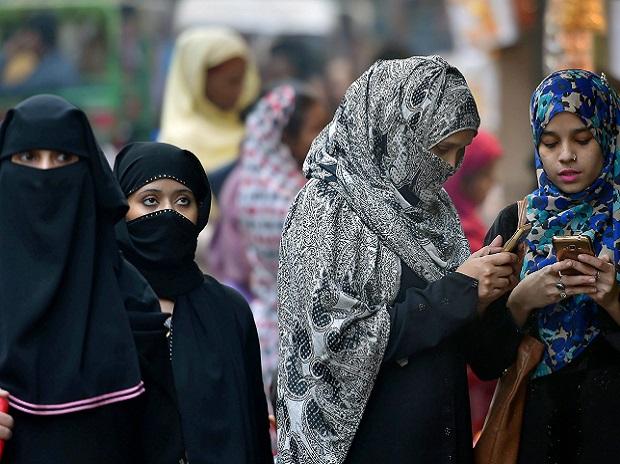
Triple Talaq: Patriarchy not just a 'women's issue', marriage no holy cow

From academic jargon, the word 'patriarchy' has come a long way in the Indian public sphere. But it has a long way to go yet ...