Showing posts with label Black Money. Show all posts

Wednesday, 8 November 2017

Black day vs anti-black money day: BJP, Opposition face off over note ban

Manmohan Singh said if anyone benefited demonetisation, GST, it was China whose imports to India grew by 23% in just 1 year

Demonetisation, currency, notes

A year into demonetisation – Anti-Black Money Day, the opposition and the government on Tuesday exchanged verbal blows over the action with former Prime Minister Manmohan Singh calling it disastrous while Finance Minister Arun Jaitley rejected the charge saying there was an ethical and moral rationale behind the decision which had given a “new direction” to the economy.

Jaitley, however, acknowledged that the “benefits may not be immediately visible” but would make future generations proud.

Fielded by the party in poll-bound Gujarat, Manmohan Singh said the measure had failed its ostensible purpose of curbing wealth accumulated through tax evasion as it was known by now that none of the stated objectives of eliminating black money, terror financing and counterfeit currency have been met.


“The fact that more more than 99 per cent of the (spiked) currency came back into the banking system has punctured the government’s claim. There are also widespread reports of the rich converting their black money into white while the poor have undergone immense suffering,” he said, “invoking the memory of more than a hundred people who lost their lives last year in the wake of the demonetisation”.

Calling the withdrawing of 86 per cent of legal tender in one single stroke as undemocratic and a coercive move, the former Prime Minister said “the demonetisation was clearly not the solution” to end the menace of black money and tax evasion in India.

“Demonetisation has proved to be a mere bluster to reap political dividends while the real offenders have escaped,” he said, again calling it “an organised loot and legalised plunder”. | READ MORE

Monday, 2 January 2017

From empathy to sops: 10 key takeaways from Modi's New Year's Eve speech

modi-new-years-eve-speech
Latest News - Business Standard brings you its selection of 10 important takeaways from Prime Minister Narendra Modi's address to the nation on the New Year's Eve:
Here are 10 important takeaways from Prime Minister Narendra Modi's address to the nation on the New Year's Eve:
1. The government will bear 60 days' interest on select farm loans.
2. In 2017, the government is bringing new housing schemes. a) On home loans of up to
Rs 9 lakh, for poor and middle class people will get 4% exemption on interest; b) on loans of up to Rs 12 lakh, the exemption will be 3%
3. PM announced schemes for women: Rs 6,000 assistance for pregnant women.
4. "I am overwhelmed by the public support after demonetisation," said Modi.
5. Modi says honest taxpayers will get benefit.
6. Thirty million kisaan credit cards will be converted into RuPay cards, said the PM.
7. 33% more homes would be build in rural areas under the Pradhan Mantri Awas Yojana. 
8. The credit guarantee of MSME will be increased to Rs 2 crore from Rs 1 crore.
9. The government will guarantee loans up to Rs 2 crore for small traders.
10. For senior citizens, 8% interest on deposits of up to Rs 7.5 lakh for 10 years.

Monday, 26 December 2016

Strong law against benami property: Modi defends changes in note ban rules

Breaking News : Dismissing the criticism of frequent changes in rules after demonetisation, Prime Minister Narendra Modi on Sunday alleged that those who cannot endorse corruption and black money openly are relentlessly finding fault with his government. He vowed to take forward the fight against unaccounted money and corruption by implementing a strong law against benami properties.
1481911968-1867
“I assure you this is just the beginning in our fight against corruption. We have to win this war. There is no question of stopping... there is no question of retreat,” said Narendra Modi, under sharp attack from the Opposition over demonetisation, with Congress Vice-President Rahul Gandhi levelling allegations of “personal corruption” against him.
In his last monthly address this year in the Mann ki Baat programme, Modi defended the changes in the rules related to deposits and withdrawals, saying these have been done to reduce people’s problems and defeat the forces which are out to thwart his government’s fight against black money and corruption.

“Being a sensitive government, it amends rules as required, keeping the convenience of the people as its foremost consideration, so that citizens are not subjected to hardships,” said Modi. At the same time, it has to come out with “antidotes” against new tactics of the “murky enterprise of perfidy and corruption”.

“People, who cannot endorse corruption and black money openly, resort to searching for faults of the government relentlessly,” he said, lashing out at critics.

He said that some people who are spreading rumours that political parties enjoy all concessions and exemptions “are wrong” and asserted that “all are equal before law” and they have to abide by it. Read More

Wednesday, 23 November 2016

No transaction charges on debit card payments: Govt

1479883031-2392
To encourage widespread usage of digital payments post demonetisation, the government on Wednesday said no transaction charges will be levied on debit cards till December 31.
All public sector banks and some private sector ones have agreed to waive the transaction cost for all payments made through Debit Card Payments, Economic Affairs Secretary Shaktikanta Das said.
The move comes after the government reviewed the situation post demonetisation of 500 and 1,000 rupee notes and decided to encourage digital payments.
"Public sector banks and some of the private sector banks, and some of the service providers who provide switching services, have agreed to waive the service charges on the use of debit cards up to December 31, 2016," Das said.
As of now, Rupay debit cards have already waived the switching charges. Other debit cards which operate international card network companies like Mastercard and Visa, currently charge transaction charges.
So far, customers bear the transaction cost commonly known as merchant discount rate (MDR) on payments made to the government.
"The MDR charges on use of debit cards, the charges being levied by the banks and the switching charges will stand completely waived. So, there will be no charge on use of debit cards. Read More

Tuesday, 22 November 2016

Will supporters of demonetisation please click yes, PM Modi asks nation

1479650844-2213
After ‘Mann Ki Baat’, the Narendra Modi government is experimenting with ‘Jan Jan Ki Baat’ to get people’s feedback on burning issues. Within an hour of the Prime Minister asking citizens of the country to rate his latest initiative—demonetisation—on his narendramodi app, there were 3,700 retweets and 7,900 likes on his Twitter handle. Soon, Jan Jan Ki Baat was trending on social media with ‘’cashless India’’ stopping to give its feedback on the banning of big notes.
It is not known yet how many have taken time out to assess the latest initiative of the government, but the questions asked are pointed. With several state elections lined up through 2017, the PM wants to be sure how people have responded to demonetization as a step to eliminate black money.
It’s a 10-step survey, beginning with a simple question—do you think there’s black money in India. Then it goes on to ask whether you think it needs to be eliminated and what you think of the government efforts in eliminating black money etc. From the fifth question onwards, the survey gets into demonetisation full steam. Question number 5: How do you assess the government move to ban Rs 500 and Rs 1,000 notes? One has to move the fingers along the wheel to rate, while green and red lights flash on the screen to suggest what your assessment is. Read More

Monday, 21 November 2016

Jumla is the new black: Has Modi really rescued India from black money?

1439526670-3784
It’s hard to tell whether demonetisation will turn out to be a bold hit or a costly miss, but it appears to many that the government has taken the black money bull by the horns. Announcing the withdrawal of Rs 500 and Rs 1000 notes, Prime Minister Narendra Modilisted several steps that his government had taken so far in its war on black money:
narendra-modi
Looks impressive, what’s not to like? Just that, once you discount the hype, it’s not very different from what’s been done by past governments, whether the United Progressive Alliance (UPA) or the United Front (UF).
Show me the money
Consider the figure of Rs 1,25,000 crore collected over two-and-a-half years. The government hasn’t provided a break-up, but based on finance ministry replies to parliamentary questions, it includes the following:
Rs 65,250 crore declared under the 2016 Income Disclosure Scheme (of which 45% will flow in as actual taxes)
Rs 21,354 crore of undisclosed income seized from individuals and businesses (under Section 132(4) of the Income Tax Act)
Rs 22,475 of additional income assessed from taxpayers by surveys (carried out under Section 133A of the Income Tax Act)
Rs 8,186 crore of undisclosed income held by Indians in accounts with HSBC Geneva, revealed by the French government in 2011
Around Rs 5,000 crore of offshore holdings by Indians that an International Consortium of Investigative Journalists investigation exposed in April 2013
All of which adds up to Rs 1,22,265 crore – close enough to our headline figure. But how remarkable is this effort?
The income disclosure scheme is a one-off (more about that later), but what about the black money brought into the open via searches, seizures and surveys? The chart below shows the record in previous years (source here):
main-qimg-0aee66d6c54d1ecbc0e4edc759ad13e8-c
interesting. Using the same definitions used by the Modi government, it turns out that the quantum of black money exposed in the last two years of the UPA was more than Rs 1,30,800 crore. That’s right – the UPA tracked down more black money than the Modi government did and in a shorter time frame.
As always, there are caveats. Not all the money assessed under Section 133A should be strictly considered “black”; some of it consisted of income that taxpayers felt was not taxable for whatever reason, but the authorities disagreed. Still, if the Modi government wants to count all those funds under its “black money” haul, it cannot deny the UPA credit for a bigger haul.
Bring back the money
That’s fine, you might say, but hasn’t the Modi government adopted a much more comprehensive approach to black money than the scam-tainted UPA? It’s passed bills to bring back black money, succeeded with its income disclosure scheme and, as Modi himself stated, reached agreements with many foreign countries to provide tax information. Read More

Wednesday, 16 November 2016

SBI reportedly writes off bad loans of Rs 7,016 cr; Cong rakes up issue in Parliament

The clean-up drive saw the bank forgoing almost Rs 1,201 crore in dues owed by Vijay Mallya's defunct Kingfisher Airlines
big_407672_1457862220
The State Bank of India has cleaned up non-performing assets worth Rs 7,016 crore from its books by writing off loans given to 63 wilful defaulters, Daily News & Analysis reported on Wednesday. Of the 63 accounts, 31 have been partially written off and six shown as NPAs.
The clean-up drive saw the bank forgoing almost Rs 1,201 crore in dues to Vijay Mallya’s defunct Kingfisher Airlines, which is at the top of the list of wilful defaulters. In other words, loans given to Kinfsiher Airlines will no longer be shown in the bank’s balance sheet, though the airline has outstanding dues of almost Rs 1,201 crore. Some of the other prominent defaulters who feature in the write-off list are KS Oil (Rs 596 crore), Surya Pharmaceuticals (Rs 526 crore), GET Power (Rs 400 crore) and SAI Info System (Rs 376 crore).
The Congress party immediately reacted to the article and linked it to the government's demonetisation drive. "As Modiji's blue-eyed boy Vijay Mallya gets a Rs 1,200-cr write-off, fighting black money is political hypocrisy at its worst," said Congress leader Randeep Singh Surjewala.
Even Congress leader Anand Sharma expressed apprehensions that the money received from people migth be used to recapitalise the banks and wipe out Rs 6 lakh crore of non-performing assets of big industrialists.
"The Non-Performing Assets (NPAs) are to the tune of Rs 6 lakh crore. Do they want to utilise the money deposited by people in banks to wipe out the NPAs (on account) of industrialists who have played fraud on the country?" party spokesman Kapil Sibal said at a briefing by the All-India Congress Committee.
He claimed that the Reserve Bank of India RBI would transfer the money to the government, which would recapitalise banks and clear their balance sheets, and the "whole thing has nothing to do with black money; it is a compromise on black money and with NPAs".
Even Delhi Chief Minister Arvind Kejriwal has called demonetisation the biggest scam.
"This is what we feared. The hard-earned money of people will be put into banks to write off the loans of crorepatis. They have already started doing it," he said on Twitter."

Tuesday, 15 November 2016

Has demonetisation stopped stone pelting, curbed terror financing in J&K?

In the last few days after PM's daring move there hasn't been stone pelting on security forces.

Defence Minister Manohar Parrikar has hailed the government's demonetisation decision and said it has let to decline in stone-pelting incidents in Jammu and Kashmir.
"Earlier, there were rates: Rs 500 for stone pelting (onsecurity forces in Kashmir) and Rs 1,000 for doing something else. PM has brought terror funding to zero," Parrikar said.
"In the last few days after PM's daring move there hasn't been stone pelting on security forces. I congratulate PM for it," Parrikar said.
According to a report in Deccan Herald, the incidents ofstone pelting have declines in the Valley ever since Prime Minister Narendra Modi scrapped Rs 500 and Rs 1,000 currency notes across the country.
While police handouts on the situation in the Valley stated that no incidents of stone-pelting were reported from anywhere in the past few days, officials said a major reason behind the sudden decline in violence was that the "money channels" of inciting violence have been sealed.
In the past, several complaints had cropped up that separatists were paying stone-pelters and other anti-national elements in big currency notes. Apart from taking on corruption, black money; the step by the Modi government has resulted in peace and calm in the Valley.
Security analysts believe that Kashmir will remain largely calm in the coming days as miscreants will run short of money to keep their network operational.
For the last four months, the Valley was brought to a standstill but now things are falling back into place with people carrying out their daily chores, schools being opened and students appearing for exams.
Barring a few law and order incidents at some places, hundreds of vendors put up their stalls at the weekly flea-market in the city on Sunday while banks across Kashmir witnessed a rush of customers in view of the demonitisation of 500 and 1000 currency notes, bringing some semblance of normalcy in the unrest-hit Valley.
Normalcy ceased to exist in Kashmir due to unrest triggered by the killing of Hizbul Majhideen militant Burhan Wani since July 8.
However, there has been increased movement of people and public transport, except buses, in Srinagar in the last month. Apart from private vehicles, auto-rickshaws and inter- district cabs were also plying in large numbers.
Defying separatists' call for protest, 95 per cent students appeared for class 12th board exams in Kashmir on Monday. About 94.88 per cent of the total 31,964 students appeared in the examination, an official of Jammu and Kashmir Board of School Education (BOSE), which conducts the examinations, said.(more)

Demonetisation: Pune think tank advised Modi, suggested scrapping income tax too

ArthaKranti claims its leading light Anil Bokil, an Aurangabad-based chartered accountant and architect, was allocated nine minutes' audience with Modi in July this year
1479099920-5881
Pune-based economic think tank ArthaKranti, which claims to have suggested to Prime Minister Narendra Modi to demonetise the Rs 500 and Rs 1,000 currency notes, wants the government to abolish income tax and 56 other taxes and replace it by a banking transaction tax, or BTT, of two per cent on earnings.
“Imagine, taxes reduced. Petrol at Rs 28 per litre. That is ArthaKranti’s next proposal,” the outfit tweeted on Monday. ArthaKranti, which literally means financial or economic revolution, is a group of technocrats and chartered accountants. It first proposed its five-point proposal for tax reforms in 1999.
It had even planned a meeting in Pune on November 11-13 to demand that the PM implement its five-point agenda. According to the organisation, it has had regular interactions with officials in the Prime Minister’s Office all through 2015, and that it had given its blueprint for an economic revolution in the country to Modi in 2014, before he was elected the prime minister.
ArthaKranti claims its leading light Anil Bokil, an Aurangabad-based chartered accountant and architect, was allocated nine minutes’ audience with Modi in July this year, but the two discussed the idea of demonetisation for over 90 minutes. The group had also met Modi in Gandhinagar in 2013, when he was the chief minister of Gujarat. On Sunday, the PM said in Belgaum that the demonetisation move was planned by a small group of people over the past 10 months.
The outfit wants all taxes, including income tax, be done away with. The only current tax it says should be retained is import duty or Customs. Read More

Wednesday, 9 November 2016

You have 50 days to deposit your notes: Full text of Modi's black money speech

1478166512-8211
My dear citizens
I hope you ended the festive season of Diwali with joy and new hope. Today, I will be speaking to you about some critical issues and important decisions. Today I want to make a special request to all of you. You may recall the economic situation in May 2014 Narendra Modiwhen you entrusted us with an onerous responsibility. In the context of BRICS, it was being said that the “I” in BRICS was shaky. Since then, we had two years of severe drought. Yet, in the last two and a half years with the support of 125 crore Indians, India has become the “bright spot” in the global economy. It is not just we who are saying this; it is being stated by the International Monetary Fund and the World Bank.
In this effort for development, our motto has been ‘Sab Ka Saath Sab Ka Vikas’: We are with all citizens and for development of all citizens. This Government is dedicated to the poor. It will remain dedicated to them. In our fight against poverty, our main thrust has been to empower the poor, and make them active participants in the benefits of economic progress.
The Pradhan Mantri Jan Dhan Yojana,
the Jan Suraksha Yojana,
the Pradhan Mantri Mudra Yojana for small enterprises,
the Stand-up India programme for Dalits, Adivasis and Women,
the Pradhan Mantri Ujjwala Scheme for gas connections in the homes of the poor,
the Pradhan Mantri Fasal Beema Yojana and Pradhan Mantri Krishi Sinchai Yojana to protect the income of farmers,
the Soil Health Card Scheme to ensure the best possible yield from farmers’ fields,
and the e-NAM National Market Place scheme to ensure farmers get the right price for their produce
—these are all reflections of this approach.
In the past decades, the spectre of corruption and black money has grown. It has weakened the effort to remove poverty. On the one hand, we are now No. 1 in the rate of economic growth. But on the other hand, we were ranked close to one hundred in the global corruption perceptions ranking two years back. In spite of many steps taken, we have only been able to reach a ranking of seventy-six now. Of course, there is improvement. This shows the extent to which corruption and black money have spread their tentacles. Read More
Also Read:

Thursday, 2 June 2016

PM to visit Switzerland, US in five-nation tour

 
Prime Minister Narendra Modi will embark on a five-nation tour from Saturday. He will visit Afghanistan, Qatar, Switzerland, the US and Mexico. He is also slated to head for a four-nation tour to Africa in the first half of July. While the itinerary of that visit is still being worked out, it is likely to include visits to Mozambique, South Africa, Tanzania and Kenya. It will be the first visit of his tenure to mainland Africa. The PM had visited the island nations of Seychelles and Mauritius in March 2015.
The highlight of the PM’s five-nation tour will be the visit to Switzerland on June 5 and 6, en-route to the US. In Switzerland, the PM will hold discussions with the President of the Swiss Confederation Johann Schneider-Ammann. Modi is also likely to take up early conclusion of an agreement on the automatic exchange of tax information.
This agreement will facilitate the exchange of information between the tax authorities of the two countries and potentially help Indian tax authorities to track unaccounted money, or ‘black money’, suspected to be stashed away in Swiss banks by Indian nationals. Tracking down the ‘black money’ was a key promise of the Modi-led Bharatiya Janata Party in the run-up to the 2014 Lok Sabha elections. Read More.

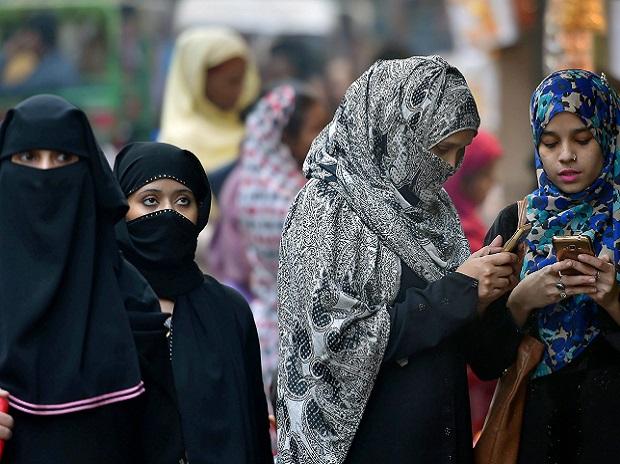
Triple Talaq: Patriarchy not just a 'women's issue', marriage no holy cow

From academic jargon, the word 'patriarchy' has come a long way in the Indian public sphere. But it has a long way to go yet ...