Showing posts with label Australia. Show all posts

Monday, 29 May 2017

Modi govt's new restrictions on cattle slaughter will hurt farmers the most

The government’s move will lead to an explosion in the number of ‘stray’ cattle

1484556646-3722
Gazette No. 396, issued by the Government of India on May 23 and titled the ‘Prevention of Cruelty to Animals (Regulation of Livestock Markets) Rules, 2017’, promises to be the final death knell of cattle and buffaloes in India, and along with them, the destruction of what little remains of a dignified life and livelihood for farmers.
This completely innocuous sounding amendment, issued under the Prevention of Cruelty to Animals Act – a Central law – imposes in section 22 a set of ‘Restrictions on sale of cattle’. These require the owner of cattle being brought to the market for sale, in other words the farmer, to produce and submit to the Animal Market Committee a written declaration stating that “the cattle has not been brought to the market for sale for slaughter”. In turn, the buyer of the animal has to undertake “that the animal is being bought for agriculture purposes and not slaughter”
The committee will further keep records of the sale of animals to ensure they are not resold within six months of purchase. They will also keep ID records of the buyer, seller and animal.
The rules defines ‘cattle’ to mean “cow, calf, bull, bullock, buffalo, heifer, steer and camel”.
By equating ‘slaughter’ with cruelty and criminalising the trade and transportation of animals for slaughter at animal markets as an act of cruelty, the Central government has effectively enforced a country-wide ban on the slaughter of buffaloes and cattle, and the consumption of beef, despite statements of denial from the environment minister.
Animal markets are crucial nuclei of the production cycle of animals, through which animals pass from farmers to others and vice-versa. These new rules effectively choke the free movement of animals via the market space and, more critically, completely undermine the freedom and rights of farmers, traders and all others whose livelihoods are linked to this production cycle, which ultimately is what sustains cattle and buffaloes of this country.
The right of farmers to life and livelihood is at stake: their dairy livelihoods and bullock-based agricultural livelihoods stand to be completely destroyed with this cruel law – cruel for farmers and cruel for animals.| READ MORE….

Thursday, 25 August 2016

Scorpene leak: New set of documents out, gives details on sonar system of submarines

1446121797-3448
Australia's The Australian newspaper on Thursday uploaded a fresh tranche of leaked documents relating to information about operating instructions of underwater warfare system of the six Scorpene submarines which are being built in India by French firm DCNS.
However, a top defence analyst allayed fears that it could compromise the security of the strategically important combat vessels.
Like in the previous case, the newspaper has blacked out all details which it felt would compromise India's security interests.
However, the new set of documents, with Indian Navy insignia on it and marked "Restricted Scorpene India", gives details about the sonar system of the submarines which is used to gather intelligence underwater.
It talks about a wide range of technical specifications of the sonars and at what degree and frequency it will function. It has a System Technical Manual and an Operating Instruction Manual that have crucial details of the combat management system (more)

Tuesday, 23 August 2016

France's DCNS, builder of Australia's new submarines, suffers huge data leak

The leak contains more than 22,000 pages outlining the secret combat capability of six submarines that DCNS has designed for the Indian Navy.
File photo of a Scorpene-class diesel-electric submarine in Port Klang outside Kuala Lumpur
File photo of Malaysia's first submarine, "KD Tunku Abdul Rahman", a Scorpene-class diesel-electric submarine, docks in Port Klang outside Kuala Lumpur September 3, 2009. REUTERS/Bazuki Muhammad/Files
The French shipbuilder which earlier this year won a A$50 billion ($38.06 billion) contract to build Australia's next generation of submarines has suffered a massive data leak, raising doubts about the security of one of the world's biggest defence projects.
France's DCNS Group beat out Germany's ThyssenKrupp AG and a Japanese-government backed bid by Mitsubishi Heavy Industries and Kawasaki Heavy Industries, in a blow to Japanese Prime Minister Shinzo Abe's push to develop defence export capabilities as part of a more muscular security agenda.
The leak, which was first reported in The Australian on Wednesday, contains more than 22,000 pages outlining the secret combat capability of six submarines that DCNS has designed for the Indian Navy.
The documents cover the Scorpene-class model and do not contain any details of the vessel currently being designed for the Australian fleet.
"As a serious matter pertaining to the Indian Scorpene programme, French national authorities for defence security will formally investigate and determine the exact nature of the leaked documents," a DCNS spokeswoman said in a statement. (more)

Monday, 11 July 2016

Australia elections: PM Malcolm Turnbull to decide Cabinet after win

1442239243-4722
Australia's Prime Minister Malcolm Turnbull has on Monday returned to capital Canberra to decide on his Cabinet ministers for the 45th Parliament, after he secured victory in the 2016 federal election.
Turnbull proclaimed victory on Sunday, Xinhua news agency reported.
However, before Turnbull can be sworn into Parliament, he must decide on which ministers will take up cabinet positions, after three cabinet members were not re-elected at the election.
Turnbull said there would likely be "many new and younger faces" in the new-look coalition government, to be decided on over the next week.
"Regrettably, several ministers have not been returned and so there will be some changes," Turnbull said on Monday.
Also prior to the swearing in ceremony, Turnbull must negotiate a new coalition deal with Nationals leader Barnaby Joyce. The Nationals are expected to be in a better bargaining position for cabinet positions after they secured a higher than expected percentage of seats in the lower house at the election.
It is expected that Liberal and National MPs will meet in Canberra on July 18, and will be sworn in once Governer-General Peter Cosgrove returns from an official visit to France next week.
Debate has continued to rage over the future prospect of implementing an online or electronic voting system for future election; counting continues in five seats which are determined too close to call.
Prime Minister Turnbull said he has been "an advocate of electronic voting for a long time", while Labour Leader Bill Shorten said it is unacceptable to not have a clear result in the election eight days after voters went to the polls.
"We're a grown up democracy - it shouldn't be taking eight days to find out who won and who lost," Shorten said over the weekend, "We can't afford to let Australia drift for eight days after an election."
The Australia Elections took place on July 2.

Monday, 20 June 2016

Australian PM Turnbull promises gay marriage referendum if re-elected

1466412479-713
Australian Prime Minister Malcolm Turnbull on Monday promised a referendum on legalisation of same-sex marriages before the year ends, if he is re-elected.
"Of course, if we are successful on July 2, then I have every expectation that the parliament will swiftly legislate for a plebiscite and a plebiscite will be held shortly after parliament resumes, which I would assume to be in August," Turnbull said during an event in Sydney.
"So I would hope that the plebiscite could be held before the end of the year," said Turnbull.
Opposition Labour Party leader Bill Shorten asked Turnbull to legalise same-sex marriage immediately instead of calling a referendum, which he said, will become a "platform for homophobia".
"I intend to win the election. I intend to put forward legislation in the first 100 days," Shorten said.
Australia, which accepts civil marriage in several of its states, has been criticised for failing to legalise same-sex marriages.
In December 2013, the High Court overturned a law allowing gay marriages in the Australian Capital Territory on grounds that it contravened the Federal Marriage Law of 1961.
Similar legislative proposals have also failed in the states of Tasmania and New South Wales.Read More

Thursday, 9 June 2016

Maria Sharapova suspended for 2 years for doping

Maria Sharapova was suspended for two years on Wednesday for testing positive for meldonium at the Australian Open.
The five-time Grand Slam champion was provisionally suspended by the International Tennis Federation (ITF) in early March, when she announced at a news conference in Los Angeles that she failed a doping test in January.
Sharapova said then she was not aware that the World Anti-Doping Agency had barred athletes from using meldonium, also known as mildronate, as of January 1.
Her lawyer, John Haggerty, said Sharapova took the substance after that date.
Wednesday's ruling said Sharapova did not intend to cheat, but bore ''sole responsibility'' and ''very significant fault'' for the positive test.
In addition to testing positive at the Australian Open, she also failed a test for meldonium in an out-of-competition control in Moscow on February 2, the ITF said.
The two-year ban can be appealed to the Court of Arbitration for Sport.
Sharapova said she was first prescribed the Latvian-made drug, typically used for heart conditions, for medical reasons in 2006. She could have been barred from competing for up to four years.
The ITF ruling in Sharapova's case follows a hearing before a three-person panel. Lawyers representing the ITF argued their side, while Haggerty argued hers. He said she spoke at the hearing.
The ban throws into doubt the on-court future of Sharapova, a 29-year-old Russian who is one of the most well-known - and, thanks to a wide array of endorsements - highest-earning athletes in the world. (Read More)

Wednesday, 25 May 2016

Indian worker in Australia tells court his pro-ISIS post was 'sarcastic'

An Indian-origin aviation worker in Australia who was sacked last year for posting pro-Islamic State messages on Facebook has told a court that his comments were "sarcastic".
Nirmal Singh was facing the 'Fair Work Commission' to argue that his dismissal was 'unfair' by his previous employer Aerocare and was seeking $7,000 in lost wages.
The Commission heard Singh had written "We All Support ISIS" above a shared post from HT (Hizb ut-Tahrir) Australia about the shooting of police account Curtis Cheng by Islamic youth Farhad Khalil Mohammad Jabar in Sydney.
There were five posts in total that concerned Aerocare, two of which included pictures of Prime Minister Malcolm Turnbull.
Under cross-examination by solicitor Stephen Hughes for Aerocare, Singh said he made the posts on Facebook under a different name and believed he was conversing with a "secret group". Read More

Monday, 28 March 2016

World T20: Australia did not lose to India - but to a man called Virat Kohli


Sometimes even the most sublime superlatives fail to do justice to certain sporting performances. On a balmy Chandigarh evening on Sunday, Virat Kohli played that very innings of his career; an effort that involved immense skill and endurance. So often, Kohli devours run chases for dinner, but this 51-ball 82 will go down a “giant among giants” type of knock; one that helped India storm into the semi-finals of the ICC World T20. 
There was little muscle involved, just touch and finesse. Every boundary was struck with exquisite precision; with the dexterity of a charming ballet dancer. The field was dissected the same way a surgeon would skillfully cut open his patient, and the ball often sped away like this match was being played on a snooker table. By the time this massacre reached its conclusion, Australia were left battered and bruised, and sent tumbling out. Kohli had made an absolute mockery of the 161 the Aussies had set India for victory.
Towards the end, watching Kohli was like watching a highlight reel – almost every ball was sent crashing into the fence. Just that he was doing it for real. This was wizardry of an unseen kind, the kind that will linger in the memory for years to come. This was Kohli at his imperious best – an unassisted annihilation of one of the powerhouses of world cricket.
After Sachin Tendulkar had vanquished Australia at Sharjah in 1998, Mark Taylor had famously exclaimed that his team hadn’t lost to India, but to a man called Sachin. At the presentation ceremony on Sunday night, Steven Smith’s visage wore that same forlorn expression. He managed a wry grin but even he could not deny the damning eventuality of this brutal assault. After a point, with India having wickets in hand, a Kohli special seemed imminent.
There were moments of sheer magic: the silky flick through square-leg early on in the chase, the boundary through point off an almost yorker-length Nathan Coulter-Nile delivery, the top-spin forehand off James Faulkner that went sailing over mid-off for six – shots of a man who right now can do very little wrong.
ALSO READ: ICC World T20: Sachin Tendulkar hails Kohli's innings | Who said what on Twitter
Kohli’s was a one-man operation that was planned perfectly. As India lost early wickets and Yuvraj Singh hobbled in pain, Kohli played smartly – churning the strike over and never allowing the required run-rate to get out of hand. And then, almost at the flick of a switch, he teed off, sending the ball flying to all parts of the PCA Stadium in Mohali.
But then Mahendra Singh Dhoni does not like one-man operations. In Kohli, he has a player who is carrying the team’s entire batting on his shoulders – a major reason to worry. Rohit Sharma and Shikhar Dhawan failed to get going for the fourth game running. Ditto for Suresh Raina, who once again fell to the short ball. And, Yuvraj, despite all his valiant attempts, is no longer the batsman he once was. Maybe it’s time to get Ajinkya Rahane up and running.
In major tournaments in the last few years, so often it has been the bowling that has let India down. Not this time. After Usman Khawaja and Aaron Finch gave Australia a furious start, the Indian slow bowlers – with the exception of Ravichandran Ashwin – rescued the innings brilliantly, taking pace off the ball and striking at crucial times. Ashwin, India’s main man in crunch games, just ended up bowling two overs.
A firing Kohli or not, it’s time someone else in the Indian batting steps up and takes responsibility. This over-reliability on Kohli comes with the perilous possibility of an abject batting failure against the West Indies in the semi-final. For now, Indian fans can soak themselves in the euphoria of another Kohli masterclass. Post match, Shane Warne said that Kohli’s knock reminded him of some of the great innings played by Tendulkar. In some ways, it was even better.
But Kohli’s innings was eerily similar – in fact, identical – to Tendulkar in a completely different respect. On March 27, 1994 – exactly 22 years ago – Tendulkar opened the batting in one-day international cricket for the first time, against New Zealand in Auckland. He scored a scorching 82 – the same as Kohli on Sunday evening. 

Tuesday, 29 December 2015

New Contagious Form Of Cancer Discovered

Contagious cancers may not be as rare as thought, say scientists who have discovered a second transmissible cancer in Tasmanian devils - small dog-sized ferocious carnivores found in the Australian island state of Tasmania.

Transmissible cancers - cancers which can spread between individuals by the transfer of living cancer cells - are believed to arise extremely rarely in nature.

One of the few known transmissible cancers causes facial tumours in Tasmanian devils, and is threatening this species with extinction.

The discovery by researchers from the University of Tasmania in Australia, and the University of Cambridge in UK, calls into question our current understanding of the processes that drive cancers to become transmissible.

Tasmanian devils are iconic marsupial carnivores that are only found in the wild in Tasmania. The size of a small dog, the animals have a reputation for ferocity as they frequently bite each other during mating and feeding interactions.

In 1996, researchers observed Tasmanian devils in the north-east of the island with tumours affecting the face and mouth; soon it was discovered that these tumours were contagious between devils, spread by biting.

The cancer spreads rapidly throughout the animal's body and the disease usually causes the death of affected animals within months of the appearance of symptoms.

The cancer has since spread through most of Tasmania and has triggered widespread devil population declines.

To date, only two other forms of transmissible cancer have been observed in nature - in dogs and in soft-shell clams.

Cancer normally occurs when cells in the body start to proliferate uncontrollably. However, cancers do not usually survive beyond the body of the host from whose cells they originally derived.

"The second cancer causes tumours on the face that are outwardly indistinguishable from the previously-discovered cancer," said first author Ruth Pye, from the University of Tasmania.

"So far it has been detected in eight devils in the south-east of Tasmania," Pye said.

"Until now, we've always thought that transmissible cancers arise extremely rarely in nature, but this new discovery makes us question this belief," said senior author Elizabeth Murchison from the University of Cambridge.

The discovery of the second transmissible cancer began in 2014, when a devil with facial tumours was found in south-east Tasmania.

Although this animal's tumours were outwardly very similar to those caused by the first-described Tasmanian devil transmissible cancer, the scientists found that this devil's cancer carried different chromosomal rearrangements and was genetically distinct.

Since then, eight additional animals have been found with the new cancer in the same area of south-east Tasmania.

The study was published in the journal PNAS.


Article Source: Business Standard

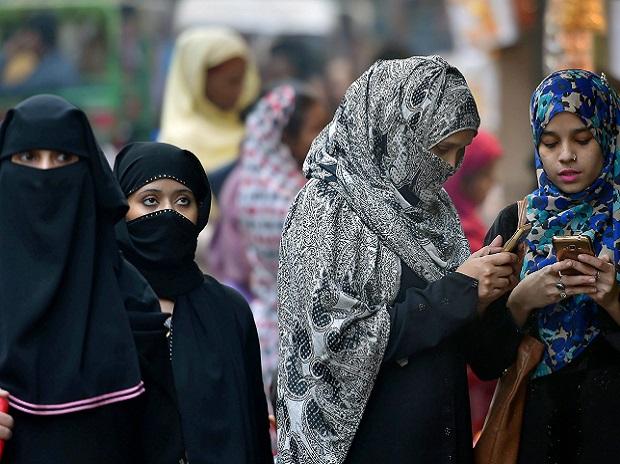
Triple Talaq: Patriarchy not just a 'women's issue', marriage no holy cow

From academic jargon, the word 'patriarchy' has come a long way in the Indian public sphere. But it has a long way to go yet ...