Showing posts with label Asia. Show all posts

Monday, 20 June 2016

NSG to take up Pakistan, India's membership requests this week

1466401233-684
The Nuclear Suppliers Group (NSG) 2016 annual plenary, which begins in Seoul on Monday, will take up membership requests from both India and Pakistan on June 23-24.
According to Dawn, Pakistan submitted its membership application on May 19, a week after India, which applied on May 12.
With massive global support, India stands as a favourite to join the 48-nation group, with an active support from the United States, Russia, Britain, France and other world powers.
China, however, stands as an obstacle to India's application, arguing that it would enhance a nuclear competition in South Asia by isolating Pakistan.
China wants NSG to admit Pakistan as well, pointing out that both India and Pakistan possessed nuclear weapons and had not signed the NPT.
While China may not force the NSG to admit Pakistan, it can block India as new members are admitted with a consensus of the existing members.
Pakistan reportedly fears that joining the NSG would increase India's access to nuclear technology, which could also enhance its weapons programme, even if indirectly.
After a June 7 meeting with Indian Prime Minister Narendra Modi at the White House, US President Barack Obama welcomed India's application to join NSG, and re-affirmed that New Delhi was ready for membership.
Earlier, US Secretary of State John Kerry sent a letter to the NSG members, saying they should "agree not to block consensus on Indian admission".
India, though not a member, enjoys the benefits of membership under a 2008 exemption to NSG rules for its atomic cooperation deal with the US.
The NSG is one of the main tools for controlling the exports and proliferation of materials that could potentially be used in making weapons of mass destruction. Read More

Tuesday, 7 June 2016

Win or lose, Trump won't dent US biz in Asia: Wagar

The US private sector will not sever seven decades of investment in Southeast Asia because of who occupies the White House, said US ambassador to Singapore Kirk Wagar.
Acknowledging a high number of inquiries generated by Donald Trump's presidential bid, Wagar said while his country's democratic process was noisy, it had built-in checks and balances.
"The one that is always forgotten is the private sector," Wagar said in an interview on Saturday on the sidelines of the annual Shangri-La security dialogue in Singapore.
Estimating that around 50 million Southeast Asian citizens had either worked for or had interaction with a US company over the last 70 years, Wagar said he did not "think that the chief executive officer (CEO) of Microsoft, of Facebook or General Motors is going to decide on their investment strategy on whether Barack Obama, Hillary Clinton or Donald Trump are president."
Trump's emergence as the Republican presidential nominee, and his opposition to the 12-nation Trans Pacific Partnership (TPP) trade pact that's been led by the US, has prompted concern among Southeast Asian nations that Obama's Asia rebalancing strategy might be quickly followed by a pivot away, if Trump wins in November. Clinton, who is still in a race with Bernie Sanders for the Democratic nomination, has also spoken against the pact, which would bind nations in a bloc that currently excludes China. The focus has now turned to attempts to get the agreement ratified by Congress in a brief window after the November vote. (Read More)

Monday, 8 February 2016

Microsoft buys SwiftKey


Microsoft Inc has agreed to buy UK-based start-up SwiftKey, an application firm known for a free software service that replaces the default keyboard on phones and tablets manufactured by Apple Inc and Alphabet Inc, for $250 million, according to Bloomberg News. Click here for more details

Thursday, 19 November 2015

Asian Shares Tentative, Dollar Shines On Fed Outlook


Asian share markets were cautious on Wednesday as another bomb scare in Europe days after the deadly Paris attacks left investors in a contemplative mood, giving a boost to safe-haven US bonds and the dollar.
The greenback held firm at seven-month highs against a basket of currencies as US economic data also backed up the case for December interest rate hike.
MSCI's broadest index of Asia-Pacific shares outside Japan were little changed, while a softer yen helped Japan's Nikkei rise 1.0%.
Wall Street shares ceded earlier gains to end almost flat on Tuesday after German authorities called off a soccer game which German Chancellor Angel Merkel was due to attend, citing threats of bombing, sparking fears of another attack coming only days after the deadly assault in Paris.
"Coming less than a week after the incident in Paris, it would be a natural reaction, even though consensus seems to be growing earlier that the impact of the terror attack would be limited," said Hirokazu Kabeya, chief global strategist at Daiwa Securities.
"Markets are likely to be going back and forth for now," he added.
US Treasuries also bounced back on safety bids, with the 10-year yield slipping to 2.273% from day's high of 2.313%.
Earlier on Tuesday, US economic data affirmed a solid economic picture, supporting the case for the Federal Reserve to raise interest rates in December.
US consumer prices increased in October from the previous month after two straight months of declines, putting annual core inflation at 1.9%.
Industrial output fell short of market expectations but the output in the manufacturing sector posted a solid increase.
All of these helped to support the dollar against other major currencies, lifting its index against six major currencies to the highest level in seven months.
The dollar index rose 0.2% on Tuesday to 99.63, hitting a high of 99.745 at one point, coming within sight of its 12-year peak of 100.39 set in March.
Against the yen, the dollar rose to 123.49 yen, edging near a 2-1/2-month high of 123.60 yen hit on November 9.
The euro also slipped to $1.0630, a seven-month low, as the common currency continues to be undermined by expectations that the European Central Bank will take fresh monetary easing steps next month.
The dollar's strength was even more impressive against precious metals and commodities.
1. Gold hit a 5-1/2-year low of $1,065.30 per ounce, extending its fall this year to 10%. It last stood at $1,070.
2. Copper continued to suffer, hitting a 6-1/2-year low of $4,590 a tonne, a decline of 27% year-to-date.
3. Oil prices rebounded a tad after data showed an unexpected stockpile draw for last week.
4. US crude future slast stood at $40.94 per barrel, off Tuesday's low of $40.58.
5. Still, they remained not far from 6-1/2-year lows hit in August on concerns about a global supply glut.
6. The global benchmark Brent last stood at $43.99, less than $2 away from its August low of $42.23.
7. Most emerging market currencies, however, fared better, staying well above multi-year lows hit earlier this year.
8.The Brazilian real stood at 3.81 to the dollar, off its record low of 4.2482 hit in September.
9.One exception was the Chilean peso, which hit a 12-1/2-year low on the slide in copper prices.

Article Source:Business Standard

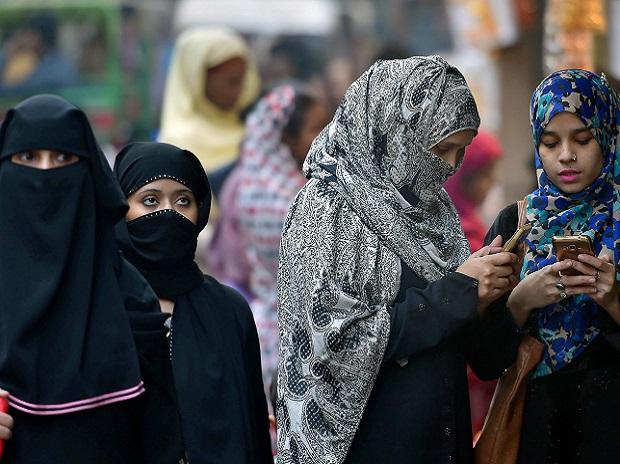
Triple Talaq: Patriarchy not just a 'women's issue', marriage no holy cow

From academic jargon, the word 'patriarchy' has come a long way in the Indian public sphere. But it has a long way to go yet ...